July 17, 2026 · Trucko Team
Freight Fraud Isn't Slowing Down in 2026 — It's Changing Shape
Deceptive pickup fraud and carrier impersonation are hitting small fleets harder than ever in 2026. Here's what's actually happening and what small carriers can do about it.
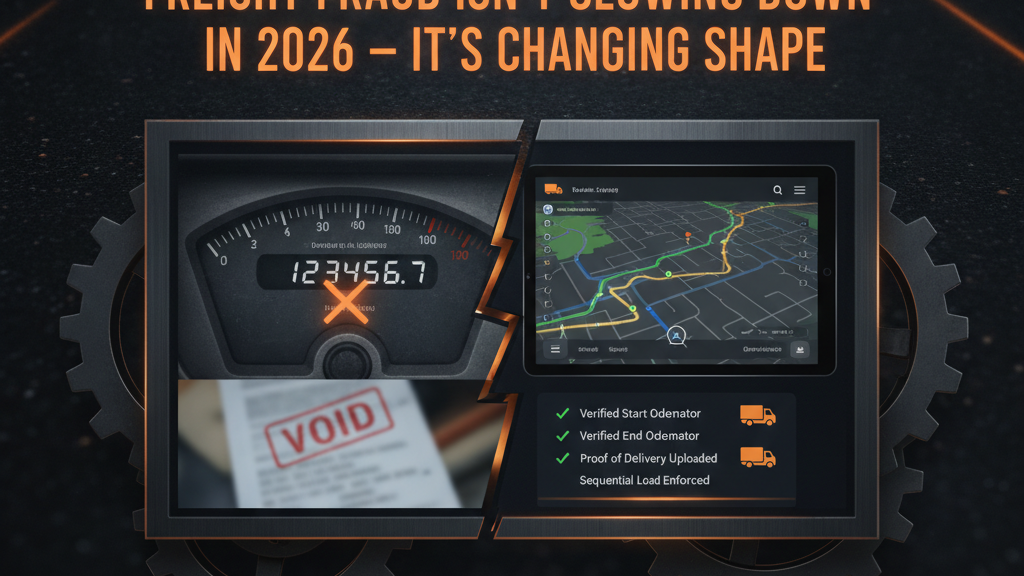
Freight Fraud Isn't Slowing Down in 2026 — It's Changing Shape
If you've been watching the cargo theft headlines and thinking "the numbers look better," slow down. The headline incident count is down slightly, but the way freight is being stolen has shifted, and the new methods are specifically harder for small carriers to catch before the load is gone.
This isn't a post about enterprise compliance programs or six-figure fraud-prevention platforms. It's about what deceptive pickup fraud actually looks like on the ground, why your 8-truck fleet is a more attractive target than you might think, and what you can realistically put in place without a dedicated safety team.
The Headline Number Is Misleading (Incidents Down, Severity Up)
According to Verisk CargoNet's Q1 2026 data, overall cargo theft incidents are down 5.3% year over year. That sounds like progress. But in the same reporting period, the average value of a stolen shipment was approximately $341,000, and deceptive pickup and impersonation fraud jumped roughly 31 to 35% year over year.
What that tells you is that criminals are working smarter, not harder. They're not grabbing more loads. They're grabbing fewer loads and walking away with more per hit. And they're doing it through paperwork and phone calls rather than force, which means your physical security measures don't stop them.
For a small carrier, one stolen load at that average value isn't a bad quarter. It can be an existential problem, especially when insurance disputes drag out and brokers point fingers.
What "Deceptive Pickup" Actually Looks Like
Deceptive pickup is exactly what it sounds like: someone shows up to collect a load claiming to be your driver, your dispatcher, or your company, and they leave with freight that isn't theirs to take.
The mechanics vary, but the pattern is consistent. A fraudulent carrier gets themselves booked on a load, often through a copied or slightly altered MC number. They show up with paperwork that looks close enough to real. The shipper's dock worker isn't a freight investigator, so the load gets released. By the time anyone figures out the carrier was fake, the truck is hours away.
CargoNet flagged in July 2026 that criminals are now compromising business phone systems to spoof verified carrier phone numbers. That means a shipper or broker calling back to confirm pickup could be talking to the fraudster, not the real carrier, while your number shows on their caller ID. You don't have to do anything wrong. Your verified identity gets used against you.
The Highway Q1 2026 Freight Fraud Index reported more than 500,000 blocked fraudulent email attempts, up roughly 50% year over year, alongside more than 2,200 identity alerts, up approximately 90% year over year. These aren't rounding errors. The volume of fraud attempts across the industry is increasing fast, even as individual incident counts tick down.
Why Small Fleets Are Targeted Differently Than Enterprise Carriers
Large carriers have compliance departments. They have carrier verification workflows baked into their TMS, dedicated safety directors reviewing new broker relationships, and legal teams that can pursue recovery. They're not easy targets.
Small fleets run on relationships, phone calls, and load boards. That's not a criticism; it's just how this business works when you're running 8 or 15 trucks. But it also means your verification process is usually informal. You accepted a load because the broker sounded legitimate. You sent a driver because the shipper had the right pickup number. Nobody ran a systematic check on the MC number before dispatch.
Fraudsters know this. They actively look for carriers who are booking through open load boards, who have limited back-office bandwidth, and who aren't using any gated verification on their outbound drivers. A carrier impersonation scheme is much easier to run against a 10-truck fleet than against a shipper whose freight coordinators use a carrier vetting platform on every load.
Your size is also a factor in what happens after. When a small carrier gets burned by a fraudulent double-broker or an impersonated pickup, there's often no dedicated person to run the fraud investigation, file the right claims in the right order, or document the chain of events for an insurance claim. Recovery is harder, and the loss lands heavier.
What You Can Actually Do Without a Compliance Team
You don't need a compliance department to tighten up your exposure. You need consistent habits and a short checklist that doesn't rely on memory.
Verify MC numbers before dispatch, every time. The FMCSA's SAFER system is free. It takes two minutes. If the MC number on the rate confirmation doesn't match what's in SAFER, stop. A surprising number of fraud attempts get caught at this step because the fake carriers are lazy about the details.
Treat callback numbers as unverified. If a broker or shipper calls to confirm a pickup detail, hang up and call the number you have on file from an independent source, not the one they just gave you. The spoofing issue CargoNet flagged in July 2026 means you can't trust that a familiar number on your caller ID is actually the person it claims to be.
Create a paper trail on every load before the truck moves. That means documented pickup authorization, a confirmed driver identity linked to that specific load, and a record of who signed off on dispatch. This is also what protects you if your number gets spoofed and a shipper releases freight to a fraudster claiming to be your driver. You have documentation showing your driver wasn't dispatched to that location.
Know your broker relationships. New broker, new load, higher scrutiny. Check their payment history on Carrier411 or similar platforms. A broker offering a rate that's noticeably above market on a lane you don't usually run is worth a second look before you commit a truck.
Train your drivers on pickup verification. If something at a shipper's dock feels wrong, give your drivers explicit permission to call you before they sign anything. A delayed pickup is recoverable. A fraudulent load release is not.
None of this is complicated. The problem is that under dispatch pressure, these steps get skipped. The answer to that isn't better intentions; it's making the steps part of the system rather than optional add-ons.
Where Fleet-Level Controls Fit
Individual habits are a start, but fraud prevention scales better when it's built into your dispatch workflow rather than depending on any one person's vigilance on any given day.
This is where Fleet Accountability Software addresses a gap that GPS trackers and basic TMS tools don't. Tracking where a truck is doesn't tell you whether the right driver was assigned to that load, whether they confirmed pickup at the right location, or whether your documentation is in order if something gets disputed later. Those are enforcement questions, not tracking questions.
For deceptive pickup fraud specifically, the exposure point is often the gap between who was dispatched and what actually got documented. When a load leaves without a verified driver assignment, a confirmed bill of lading, and a timestamped pickup record, you're relying on good faith from a lot of parties. That's a fine bet most of the time. But when it goes wrong, you have nothing to stand on.
POD & BOL Verification Software: What It Is and Why Manual Uploads Fail covers the specific mechanics of what breaks down when documentation is handled manually or after the fact. The short version is that gaps in your POD process don't just cost you in freight fraud scenarios; they also leave you exposed in payment disputes, insurance claims, and broker chargebacks.
For small fleets, the practical question is what controls you can enforce without adding headcount. The answer is gated dispatch workflows: the load doesn't move until the right boxes are checked, the documentation is captured at the point of action rather than reconstructed later, and there's a record that doesn't depend on anyone's memory of what happened.
That's a different tool than a GPS tracker. A tracker tells you where the truck went. A gated workflow tells you whether the right process was followed before it left.
It's also worth thinking about how this connects to your broader internal exposure. Fraud from outside your organization gets most of the press, but What Mileage Fraud Actually Costs a Small Trucking Fleet looks at the quieter, internal version of documentation gaps that costs fleets money through a different mechanism. The common thread is the same: manual, trust-based processes create room for things to go wrong, whether the bad actor is outside your company or inside it.
FAQ
What is deceptive pickup fraud in trucking? Deceptive pickup fraud happens when someone fraudulently poses as a legitimate carrier or driver and collects a load they have no right to take. It often involves a copied or altered MC number, fake paperwork, and increasingly, spoofed phone numbers to pass verification callbacks.
Why are small trucking companies targeted more often than large carriers? Small fleets typically have less formal verification processes, fewer dedicated back-office staff, and rely more heavily on load boards and phone-based coordination. That makes it easier for fraudsters to slip through, and harder for the carrier to recover after a loss.
How do I verify a broker or carrier identity before accepting or dispatching a load? Start with the FMCSA SAFER database to confirm MC number details independently. For callbacks, never use a number provided by the party you're trying to verify. Call the number you sourced independently. Also check payment history on platforms like Carrier411 for brokers you haven't worked with before.
Can GPS tracking prevent freight fraud? GPS tracking tells you where your truck is, but it doesn't verify who was assigned to a load, whether pickup was confirmed at the right location, or whether your documentation is in order. Preventing fraud requires enforcement controls on the dispatch and documentation side, not just location visibility.
What documentation should I have on every load to protect myself if something goes wrong? At minimum: a documented driver assignment tied to that specific load, a pickup confirmation with timestamp, a signed bill of lading captured at the point of pickup, and a record of who authorized dispatch. If a load ever gets disputed or a fraud claim gets investigated, this paper trail is what you'll be relying on.
Ready to Stop the Guesswork?
Want to know how Trucko handles fleet accountability and load lifecycle enforcement? Book a demo and see it for yourself.
For reference, visit trucko.ai